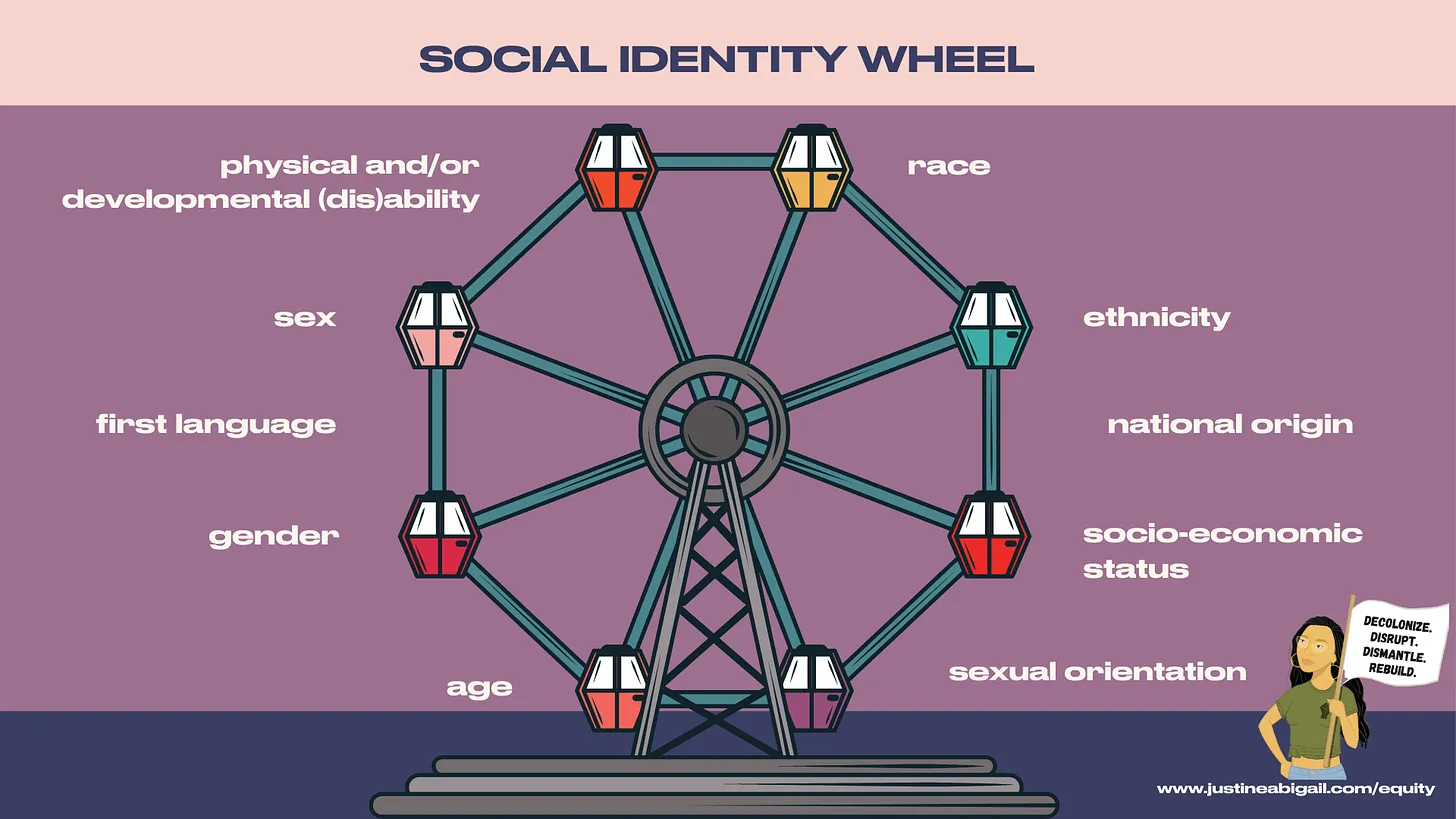
What is Identity?
Identity is a multifaceted and evolving concept. It encompasses not only the labels we give ourselves but also those that society imposes on us. Various factors shape our identity—like race, ethnicity, gender, class, sexual orientation, ability, and culture. These aspects intersect, creating our unique experiences in the world. By understanding identity, we gain insight into the rich tapestry of human experience, influencing how we perceive ourselves and interact with others.
The identity wheel visualizes the different dimensions of identity that intersect to form our individual experiences. Think about how these elements shape your worldview and the way you engage with those around you.
Understanding Intersectionality
What is Intersectionality?
Intersectionality is about recognizing how different facets of a person's identity come together to create unique experiences of discrimination or privilege. For instance, the experiences of a Black woman differ significantly from those of a white woman or a Black man because her identity encompasses both race and gender.
This concept teaches us that we can't fully grasp issues like racism or sexism without considering how these identities overlap. It’s crucial for fostering equity and inclusivity in diverse environments.
Introduction of the Term
The term "intersectionality" was coined by Kimberlé Crenshaw in 1989 to describe how various forms of inequality and identity intersect.
Growth of Feminist Theory
In the 1990s, intersectionality became a critical aspect of feminist theory, highlighting the interconnectedness of gender, race, and class.
Legal Recognition
Courts began to recognize intersectionality in cases involving discrimination, leading to more nuanced understandings of injustice.
Global Movements
Global movements like Black Lives Matter highlighted intersectionality in social justice, focusing on how various identities affect experiences of oppression.
Continued Relevance
Today, intersectionality remains essential in discussions about equity and justice, influencing policies and practices across various fields.
Case Study: Combahee River Collective
The Combahee River Collective was a group of Black feminists who advocated for both racial and gender equality, emphasizing the importance of addressing multiple forms of oppression.
Ethics, Cultural Competence, and Inclusion
Ethics involves making decisions that honor the dignity and rights of others. In diverse settings, ethical decision-making requires cultural competence—understanding the backgrounds and experiences of others and how these influence interactions.
Diversity and inclusion go hand-in-hand with ethics. Organizations that prioritize diversity actively seek out different perspectives in decision-making, ensuring that every voice is valued. Diversity isn’t just about representation; it’s about fostering an environment where differences are respected and celebrated.
Cultural competence means recognizing our biases, listening actively, and continually learning about cultures and identities different from our own.
The Ethical Decision-Making Model
1. Recognizing Bias
Acknowledge personal and systemic biases that might affect your choices.
2. Considering the Context
Look at the context surrounding the decision, including stakeholders and potential impacts.
3. Making a Decision
Evaluate your options and choose a path that aligns with ethical principles.
4. Reflecting on Outcomes
After implementing your decision, think about the results and learn from the experience.
Historical Trends & Organizational Culture
Historical events have greatly influenced how organizations operate and how technology evolves. Recognizing these trends is crucial for fostering inclusive organizational cultures.
How History Shapes the Present
History has significantly impacted organizational cultures and technological development. From exclusionary hiring practices to the creation of tools that cater only to certain groups, these trends affect who succeeds and who is marginalized.
For instance, the role of women in technology has changed dramatically over time. Historically, women were often shut out from STEM fields, but they have fought for a place in these areas, transforming the landscape of science and innovation today.
Key Moments in History Affecting Workplace Diversity
Civil Rights Movement
Sparked significant legal and social changes, expanding opportunities for marginalized groups.
Title IX
Enacted in 1972, this law prohibits gender discrimination in education, impacting women in STEM fields.
Affirmative Action Policies
Designed to promote diversity and counteract historical exclusion in the workplace.
Me Too Movement
Raised awareness about sexual harassment and advanced advocacy for women’s rights across various sectors.
Google's Diversity Initiatives
Google has launched various initiatives to tackle historical exclusion and promote a more inclusive tech environment.
Case Study: Google's Diversity Initiatives
Let’s explore how Google's efforts to enhance diversity aim to address historical exclusion in the tech industry. Despite some progress, challenges remain, as representation disparities persist at multiple organizational levels.
Background
Google, as one of the leading tech companies globally, has recognized the need to foster a diverse and inclusive workplace. Despite being a pioneer in innovation, the tech industry has faced criticism for its lack of representation, particularly concerning race and gender.
Initiatives Implemented
In response to these challenges, Google has launched several diversity initiatives, including:
1. Diversity Hiring Goals: Google has set specific targets to increase the representation of underrepresented groups within its workforce. This includes initiatives aimed at hiring more women and people of color in tech roles.
2. Employee Resource Groups (ERGs): These groups provide support and community for employees from diverse backgrounds, promoting inclusion and understanding within the workplace.
3. Diversity Training Programs: Google has invested in training programs to educate employees about unconscious bias, intersectionality, and cultural competence. This aims to create a more informed and empathetic workplace culture.
4. Partnerships with Organizations: Google collaborates with various organizations focused on increasing diversity in tech, such as Black Girls Code and the National Society of Black Engineers, to support talent development from underrepresented communities.
Outcomes
While Google has made strides in improving diversity, challenges remain. The company regularly publishes diversity reports that show progress in hiring but also reveal persistent disparities, especially in leadership positions. Critics argue that despite initiatives, there is still a long way to go in fostering true inclusion where all employees feel valued and empowered.
Reflection
Google's efforts highlight the complexities of implementing effective diversity strategies. While policies and initiatives are essential, they must be coupled with a commitment to cultural change within the organization to create a genuinely inclusive environment.